Garden & Outdoor
Grass Seed Calculator
Enter your lawn dimensions and grass type to get the exact pounds and bag count — for new lawns and overseeding.
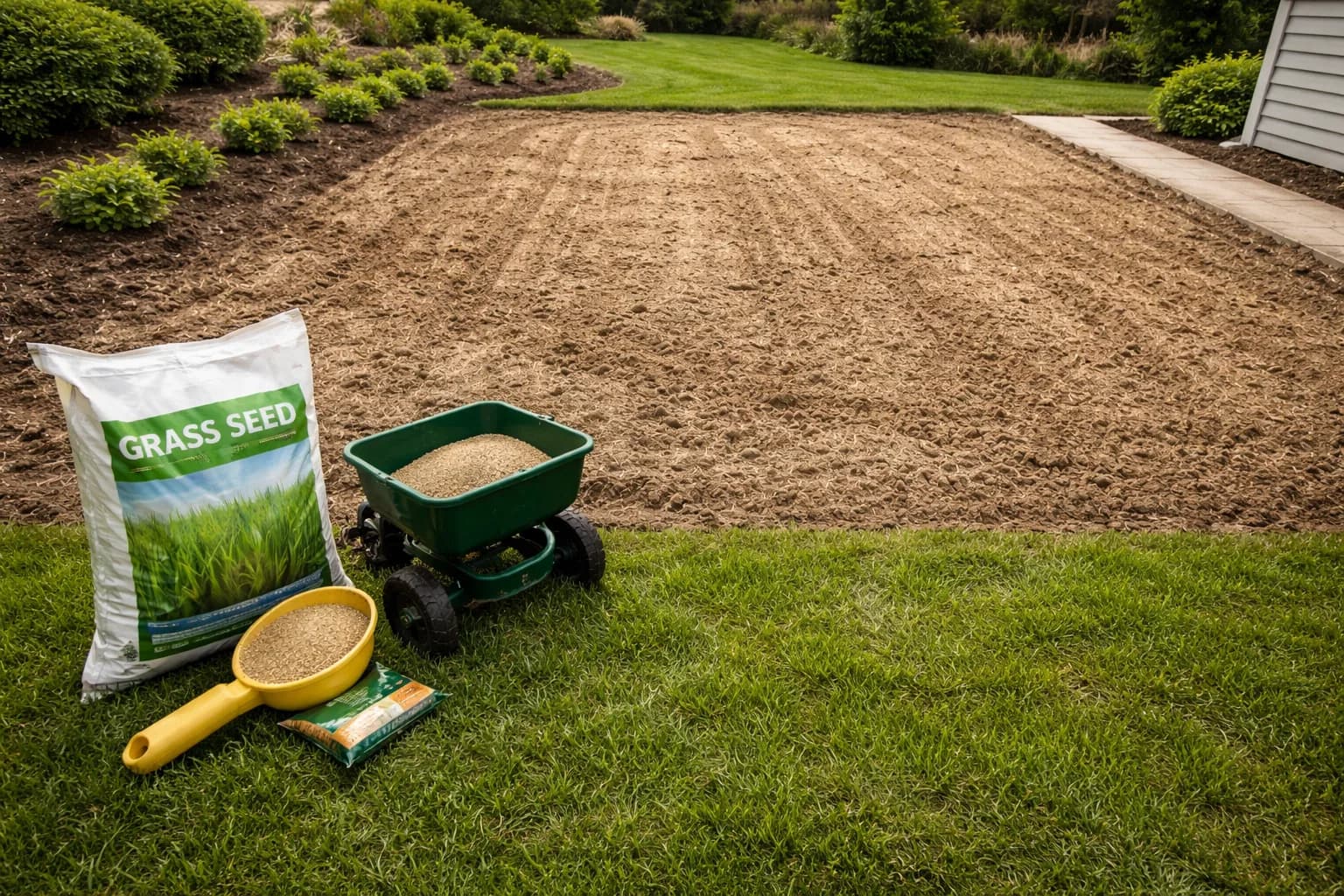
Calculate Grass Seed Needed
New lawn seeding covers bare or tilled ground at full rate.
Seeding rate: 7 lbs per 1,000 sq ft
Lawn dimensions
How the Grass Seed Calculator Works
Seed coverage is rated in pounds per 1,000 square feet — a standard unit used on every bag label. The calculator multiplies your total lawn area by the seeding rate for your grass type and whether you're starting fresh or filling in an existing lawn.
The Formula
- Total area (sq ft) = sum of all lawn zone lengths × widths
- Seeding rate = lbs per 1,000 sq ft for your grass type and mode
- Pounds needed = (total sq ft ÷ 1,000) × seeding rate
- Bags needed = pounds needed ÷ bag size, rounded up
Seeding Rates by Grass Type
| Grass Type | New Lawn | Overseeding | Season |
|---|---|---|---|
| Tall Fescue | 7 lbs / 1K sq ft | 3.5 lbs / 1K sq ft | Cool-season |
| Fine Fescue | 4 lbs / 1K sq ft | 2 lbs / 1K sq ft | Cool-season |
| Kentucky Bluegrass | 2 lbs / 1K sq ft | 1 lb / 1K sq ft | Cool-season |
| Perennial Ryegrass | 7 lbs / 1K sq ft | 3.5 lbs / 1K sq ft | Cool-season |
| Bermuda (hulled) | 1.5 lbs / 1K sq ft | 0.75 lbs / 1K sq ft | Warm-season |
| Sun & Shade Mix | 7 lbs / 1K sq ft | 3.5 lbs / 1K sq ft | Cool-season |
Rates are mid-range recommendations. Check your specific product label — coated seed may have lower recommended rates due to the weight added by the coating.
Worked Examples
Example 1: New Backyard Lawn
Area: 40 × 30 ft (1,200 sq ft)
Grass: Tall Fescue
Mode: New lawn
Rate: 7 lbs per 1,000 sq ft
Lbs needed: (1,200 ÷ 1,000) × 7 = 8.4 lbs
→ 1 × 10 lb bag
Example 2: Overseeding Front Yard
Area: 50 × 20 ft (1,000 sq ft)
Grass: Kentucky Bluegrass
Mode: Overseeding
Rate: 1 lb per 1,000 sq ft
Lbs needed: (1,000 ÷ 1,000) × 1 = 1 lb
→ 1 × 5 lb bag
Example 3: Large New Lawn
Area: 80 × 60 ft (4,800 sq ft)
Grass: Tall Fescue
Mode: New lawn
Rate: 7 lbs per 1,000 sq ft
Lbs needed: (4,800 ÷ 1,000) × 7 = 33.6 lbs
→ 2 × 25 lb bags
Pro Tips
Expert advice to get better results on your project.
Seed in fall for cool-season grasses — not spring
Fall seeding means warm soil, cooler air, natural rainfall, and less weed competition. Spring-seeded cool-season lawns compete with crabgrass and annual weeds that germinate at the same time. If you must seed in spring, wait until soil is consistently above 50°F and avoid pre-emergent herbicides, which also prevent grass germination.
Check soil temperature, not air temperature
Seed germinates based on soil temp, not the forecast. Cool-season grasses need soil above 50°F; warm-season above 65°F. Soil temperature lags several weeks behind air temperature in both directions. A cheap probe thermometer taken at 2-inch depth is more useful than any weather app for timing your seeding.
Core-aerate before overseeding
Aerating pulls 2- to 3-inch plugs from the soil, opening up channels for seed to fall into direct soil contact. Overseeding into compacted, thatchy turf without aerating is wasting seed — most of it sits on top and never germinates. Rent a core aerator the day before you seed.
Split your seed into two passes
Spread half your seed in one direction (north-south) and half in the perpendicular direction (east-west). This cross-pattern catches any misses from your first pass and gives more even coverage than a single pass, especially in large areas.
Rake lightly after seeding — don't bury seed deep
Grass seed needs light contact with soil to germinate, but burying it more than 1/4 inch deep prevents it from reaching sunlight once it sprouts. A light raking or a pass with a lawn roller is enough. Some seeds — especially bluegrass — need light to germinate and should not be covered at all.
Hold off on pre-emergent herbicides until after establishment
Pre-emergent weed killers (crabgrass preventers) work by stopping all seed germination — including grass seed. Do not apply a pre-emergent the same season you seed. Wait until your new lawn has been mowed at least 3 to 4 times before applying any pre-emergent the following season.
Ready to Buy Grass Seed?
Top-rated grass seed, starter fertilizer, and spreaders from trusted retailers.

Luster Leaf 1625 Digital Soil Thermometer
Tells you when soil is actually warm enough to germinate — the single most useful tool for timing a seeding. Cool-season grass needs above 50°F; warm-season above 65°F.
~$15
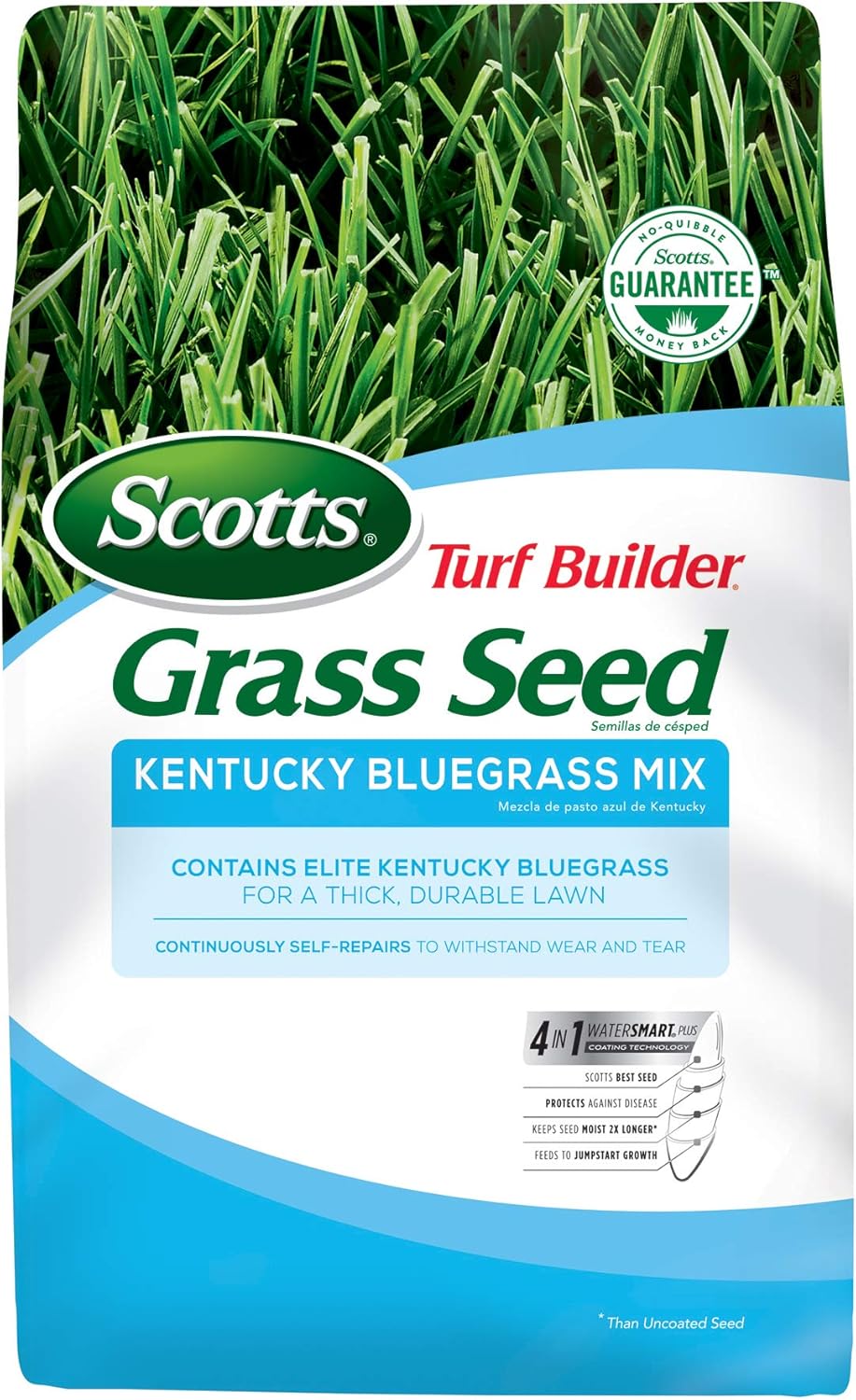
Scotts Turf Builder Grass Seed Kentucky Bluegrass, 7 lb
Self-repairing variety mix — spreads via underground rhizomes to fill bare spots over time. Full-sun requirement. Covers ~2,800–5,600 sq ft depending on use.
~$28
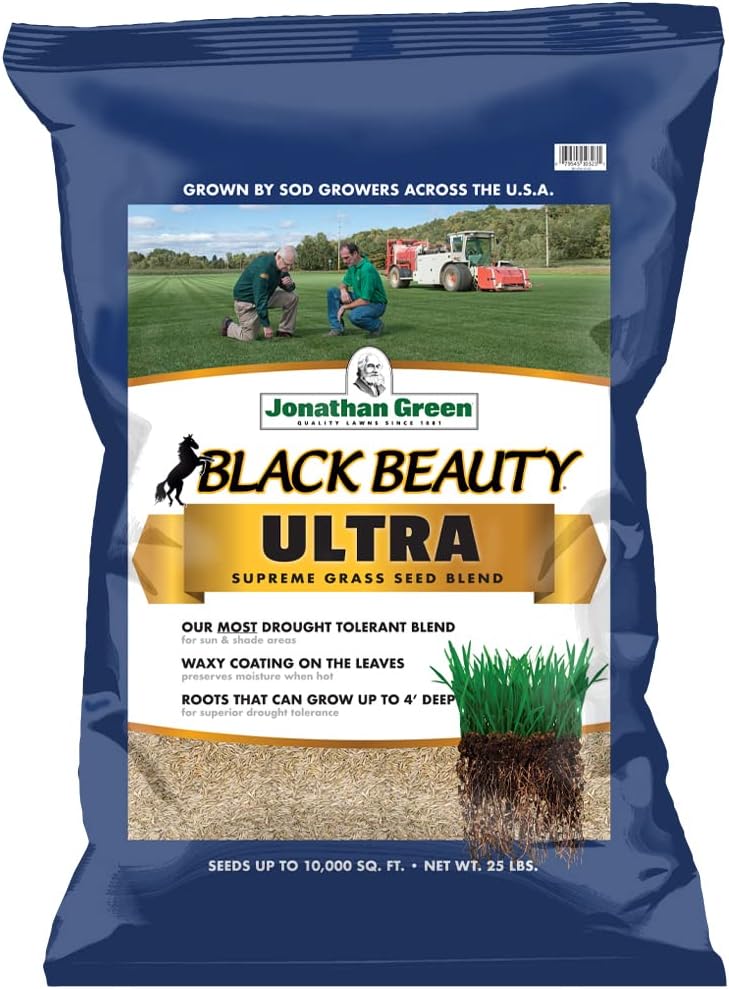
Jonathan Green Black Beauty Ultra Grass Seed, 25 lb
Tall fescue and bluegrass blend with deep green color and strong drought resistance. One of the most trusted overseeding blends in the northeast. Covers ~6,250 sq ft for overseeding.
~$89
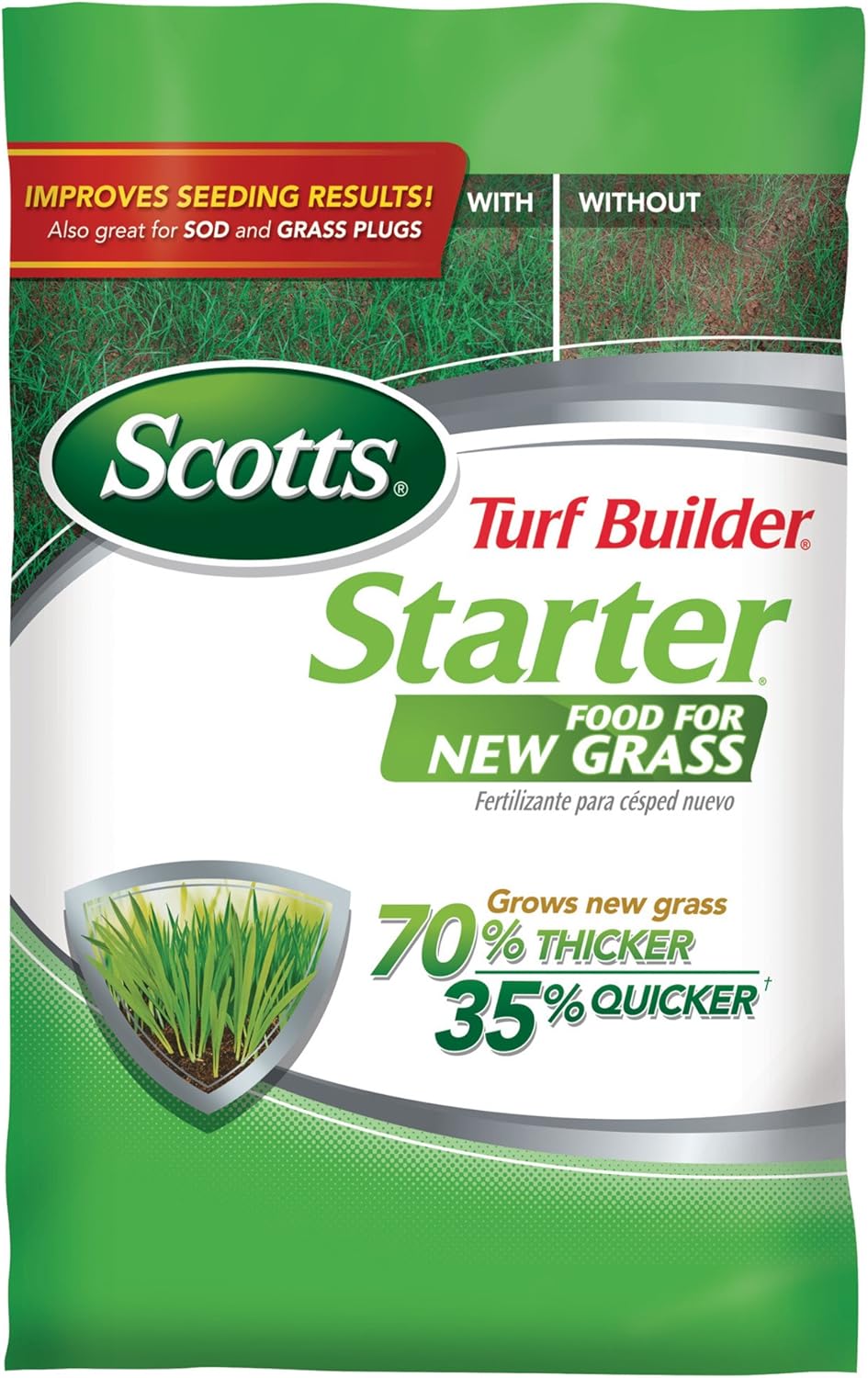
Scotts Turf Builder Starter Food for New Grass
Apply at seeding time to promote faster root development. Works with any grass seed type. Covers 5,000 sq ft. More useful than a standard fertilizer for establishing new seed.
~$18

Scotts Turf Builder EdgeGuard DLX Broadcast Spreader
EdgeGuard feature prevents seed from landing in beds and on hardscaping. Holds up to 15,000 sq ft of product. The right tool for any seeding job over 2,000 sq ft.
~$49

Eden 96213 Oscillating Lawn Sprinkler
Covers up to 3,600 sq ft with a consistent back-and-forth spray pattern — exactly what new seed needs. Adjustable range keeps water off hardscaping. Connects to any standard hose.
~$25
* Affiliate links — we may earn a small commission at no extra cost to you.
Frequently Asked Questions
Common questions about seeding rates, timing, and lawn establishment.