Calculate your tile order before you buy
Measure the total square footage of every area you're tiling, add a waste factor, and convert to boxes. For a straight-lay job in a rectangular room, 10% waste is standard. Diagonal layouts need 15%, and herringbone or chevron patterns run closer to 20% because the angle cuts waste more of each tile.
Buy a full extra box beyond your calculated amount and keep it sealed. Tile dye lots change between production runs, and matching a cracked tile two years later is often impossible if the product has been discontinued. The cost of one box is nothing compared to tearing out a section.
Check the dye lot before loading up
Every box has a dye lot number on the label. All boxes going into one continuous space need the same number. Pull boxes from different pallets in the store and compare before you leave.
Prepare the surface
Thinset needs a clean, flat, rigid surface to bond to. Any flex in the substrate — even subtle — will eventually crack grout joints and pop tiles loose.
- Concrete: Fill cracks and low spots with floor leveler. Grind down high spots. Clean off any paint, oil, or curing compounds — thinset won't bond to them.
- Wood subfloor: Install 1/4 or 1/2 inch cement backer board (HardieBacker or Durock) screwed every 6 inches. Tape the seams with fiberglass mesh and skim with thinset. Wood subfloors flex and expand with humidity; thinset alone on wood will fail.
- Existing tile: If firmly bonded and flat, you can tile over it. Scuff the surface with 60-grit sandpaper or apply a bonding primer. Check that the added height won't cause problems at thresholds and transitions.
- Walls: Use tile backer board (not standard drywall) in wet areas. Standard drywall is fine for dry backsplash areas.
Use a straightedge to check for high and low spots across the entire surface. Any deviation greater than 1/8 inch over 10 feet needs to be leveled before you tile. Large-format tile is even less forgiving — it spans farther and any hollow underneath will cause cracking.
Find center and snap layout lines
The most common beginner mistake is starting from a wall. Walls are rarely square, and starting from a corner means one side of the room gets full tiles while the opposite side gets a thin sliver — which looks wrong. Starting from the center gives you symmetrical cuts on opposite walls.
Measure and mark the midpoint of each wall. Snap chalk lines between opposite midpoints to find the center of the room. Check that the lines are perpendicular using the 3-4-5 triangle method: mark 3 ft along one line, 4 ft along the other — the diagonal between those points should be exactly 5 ft.
Before committing to these lines, dry-lay a row of tile out from center toward each wall. If you end up with a cut narrower than half a tile at any wall, shift your layout line by half a tile width. A 3-inch sliver against a wall looks like an error; a 9-inch cut looks intentional.
Dry-lay before you mix anything
Lay out a full section of tile without adhesive first. You'll catch layout problems, awkward cuts at obstacles, and pattern issues before anything is permanent. An hour spent dry-laying saves you from discovering a problem mid-installation.
Mix and spread thinset
Use polymer-modified thinset for most floor and wall tile applications. Mix to a peanut butter consistency — it should hold a ridge without slumping. Too wet and tiles will sink and shift; too dry and the thinset skins over before the tile bonds to it.
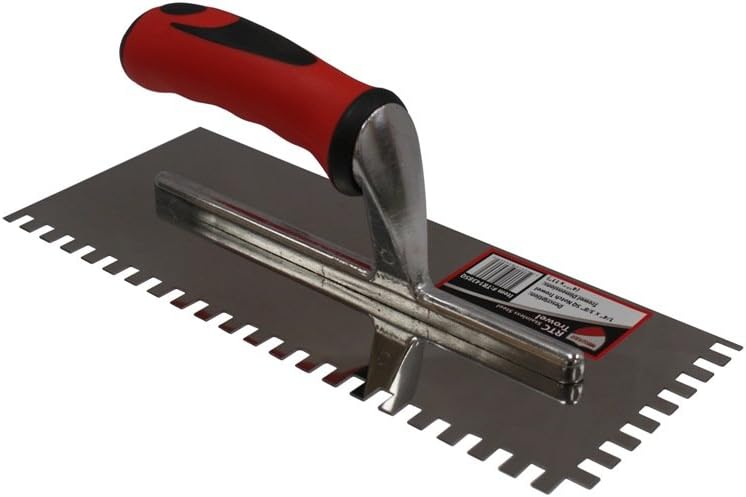
Spread thinset with a notched trowel sized to your tile. The notch size controls how much adhesive gets under the tile — and coverage matters more than most people realize. The goal is at least 95% contact between tile and thinset (80% in dry areas). Use a 1/4 by 3/8 inch square-notch trowel for 12 to 18 inch tile. For larger format tile, back-butter the tile as well as spreading on the floor.
Only spread as much thinset as you can cover in 10 to 15 minutes. Thinset begins to skin over and loses its bond once it dries on the surface. If you press your finger into the thinset and it doesn't stick, it's too far gone — scrape it up and apply fresh.
Set the tile
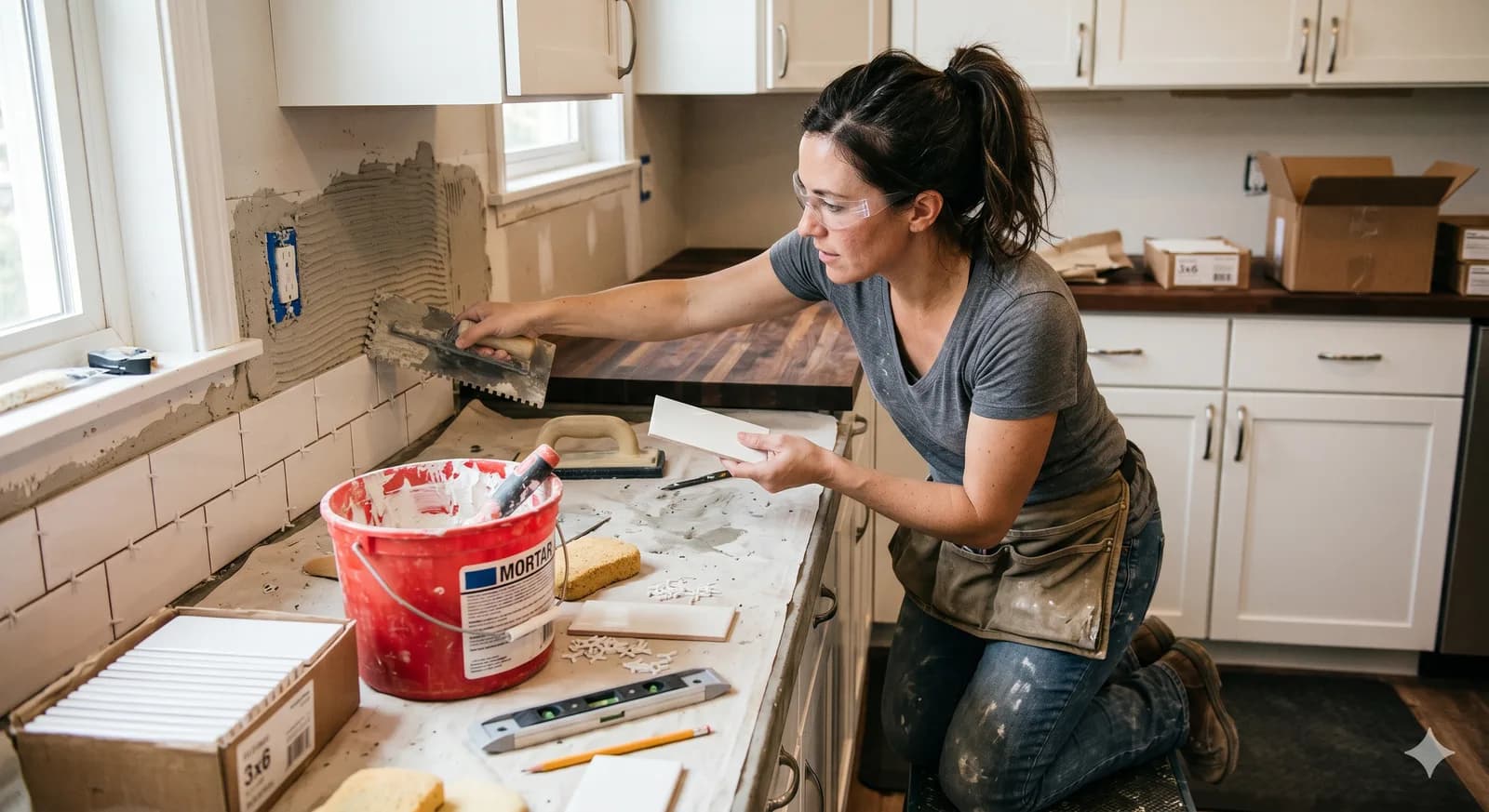
Press each tile firmly into the thinset with a slight twisting motion to collapse the ridges and get full contact. Don't slide tiles into position — that pushes thinset into the grout joint. Set each tile, then place the next one adjacent to it.
Insert spacers at each corner as you go. Use a rubber mallet and a beating block (a scrap of 2×4 wrapped in a cloth) to tap tiles flush with each other. Check with a straightedge across every few tiles — any lippage between adjacent tiles is much easier to fix now than after the thinset cures.
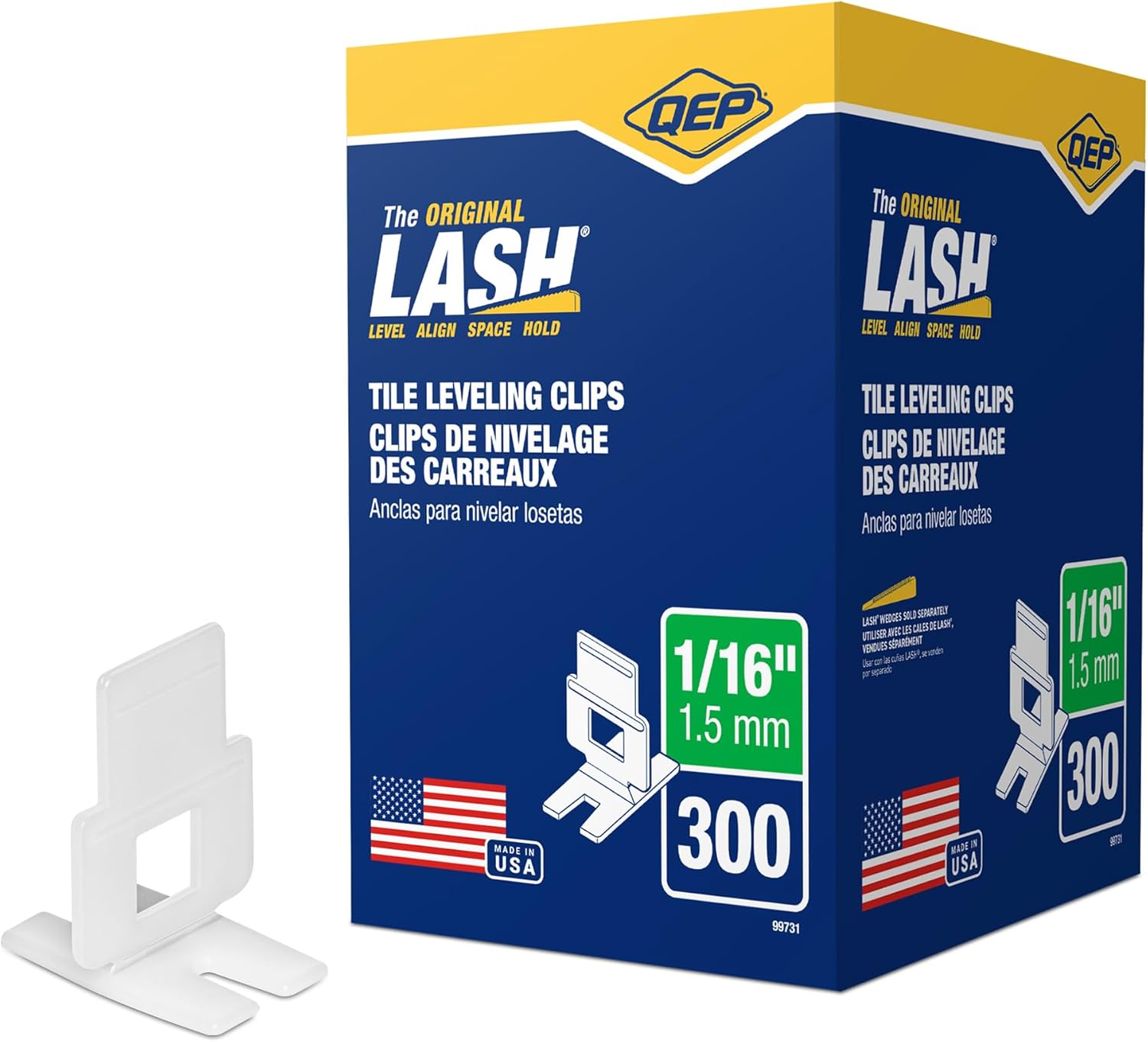
For large-format tile (18 inches and larger), use leveling clips and wedges. Press the clip under the tile edge before setting the next tile, thread a wedge through the clip, and tighten until the tiles are flush. The clips snap off at the base after the thinset cures. Without them, you'll be constantly checking and adjusting.
Lift a tile occasionally to check coverage
Pull a tile up 10 minutes into the job and look at the back. You should see thinset covering at least 95% of the surface. If you see bare spots, adjust your trowel angle or use a larger notch size.
Keep grout joints clean
Thinset that squeezes up into joints is hard to remove once cured. Wipe excess out of joints with a margin trowel as you go, not at the end of the day.
Make cuts
Save all the cuts for the end of a section rather than cutting as you go. Set all the full tiles first, then measure and cut the border tiles. Measure each cut individually — walls are rarely consistent, so a cut that works at one end of a wall won't necessarily work at the other.
A wet tile saw gives the cleanest cuts and is worth renting for any job involving more than a few dozen cuts or hard porcelain. An angle grinder with a diamond blade handles straight cuts and curves on ceramic without a saw — useful for cuts around outlets, pipes, and irregular shapes. A manual snap cutter works for quick straight cuts on softer ceramic tile up to about 12 inches.
For outlet and pipe cutouts, mark the cutout on the tile face, drill a small hole inside the outline, and cut from hole to outline with the angle grinder. Work slowly — porcelain chips easily at corners if you try to rush the cut.
Let thinset cure, then grout
Wait at least 24 hours before grouting — 48 hours for large-format tile, heated floors, or anything installed in cold or humid conditions. Walking on uncured thinset shifts tiles. There's no way to recover a tile that has moved after the thinset hardens without removing and resetting it.
If your tile is porous (natural stone, unglazed ceramic, terracotta), seal it before grouting. Grout will permanently stain unsealed surfaces. Apply a penetrating sealer, let it cure fully per the manufacturer's instructions, then grout.
Remove all spacers before grouting. Mix sanded grout for joints 1/8 inch and wider; unsanded for narrower joints. Mix to a thick peanut butter consistency — it should hold its shape without crumbling.
Apply grout with a rubber grout float, holding it at about a 45-degree angle and working diagonally across the joints. Pack grout fully into each joint and then sweep diagonally to remove the excess. Don't work in too large an area at once — grout that dries on the tile face before you wipe it is difficult to remove.
Clean and seal
Wait 15 to 30 minutes after grouting, then wipe the tile surface with a damp sponge in a diagonal motion. Wringing the sponge out thoroughly each pass — a wet sponge pulls grout back out of the joints. You'll need several passes and clean water. A light grout haze will remain on the tile; buff it off with a dry cloth once the grout has set another 30 to 60 minutes.
Let grout cure for 72 hours before sealing. Apply a penetrating grout sealer according to the product directions — most are wiped on and then buffed off after a few minutes. Sealing grout dramatically reduces staining and makes cleaning easier, particularly in kitchens and bathrooms. Plan to reapply every 1 to 2 years in high-use areas.
At transitions to other flooring, walls, and around fixtures, use caulk rather than grout. These are movement joints — grout cracks here because the two surfaces move independently. Color-matched caulk is available for most grout colors and looks identical from a normal viewing distance.
Installation order at a glance
- Calculate tile order with waste factor — buy an extra box to keep
- Prep substrate — flat, rigid, clean
- Install cement backer board on wood subfloors
- Snap center layout lines, dry-lay to check cuts
- Spread thinset with correct notch size, work in sections
- Set tile with spacers, check level constantly, use leveling clips for large format
- Cut border tiles individually, make outlet/pipe cutouts with angle grinder
- Wait 24–48 hours for thinset to cure
- Seal porous tile before grouting
- Grout with float at 45°, wipe diagonally, buff haze
- Cure 72 hours, then seal grout — caulk all transitions