Pool & Spa
Pool Chemical Dosing Calculator
Enter your current test readings and target levels. Get precise chemical doses for chlorine, pH, alkalinity, and stabilizer — no guesswork.
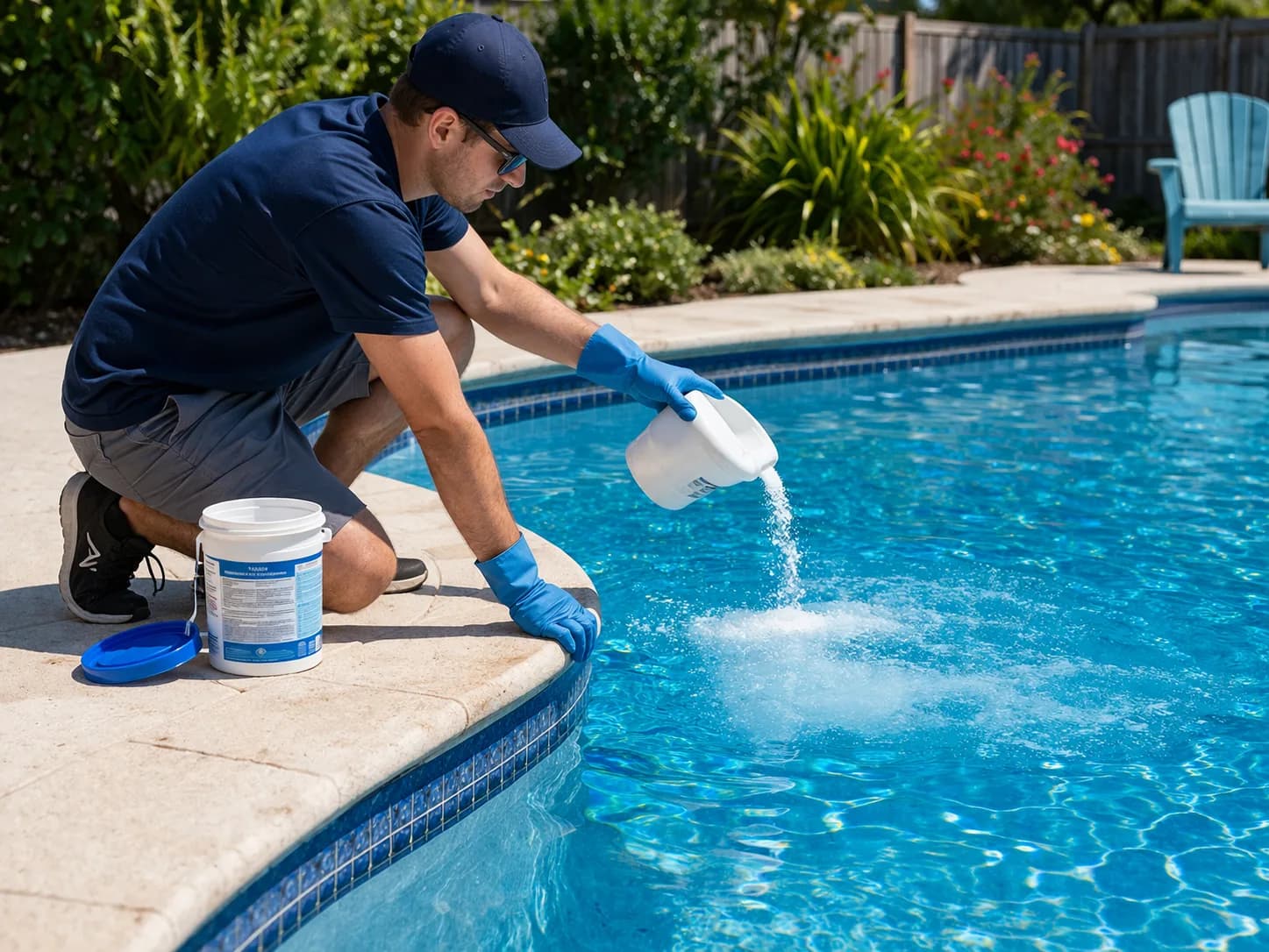
Calculate Chemical Doses
Enter your current test readings and target levels below. Only fill in the sections you need — each chemical is calculated independently.
Free Chlorine
Target range: 2–4 ppm (outdoor pool with stabilizer)
1.6 qt
of 10% liquid chlorine
pH
Target range: 7.4–7.6
12 oz
of soda ash (sodium carbonate)
Total Alkalinity
Target range: 80–120 ppm
9 lbs
of sodium bicarbonate (baking soda)
Stabilizer (Cyanuric Acid / CYA)
Target range: 30–50 ppm (outdoor pool)
4 lbs
of cyanuric acid granules
Dosing Summary
- • 1.6 qt 10% liquid chlorine
- • 12 oz soda ash (sodium carbonate)
- • 9 lbs baking soda
- • 4 lbs cyanuric acid
Add chemicals one at a time with the pump running. Wait 15–30 min and retest before adding the next chemical. These are estimates — retest after each addition.
How the Calculator Works
Each chemical is calculated independently based on your pool volume, current reading, and target level. The formulas use industry-standard dosing rates — the same ones pool professionals use.
Dosing Rates Used
- Liquid chlorine (10%): 12.5 fl oz per 10,000 gal per 1 ppm rise
- Granular shock (68% cal-hypo): ~2.3 oz per 10,000 gal per 1 ppm rise
- Soda ash (pH Up): 3 oz per 10,000 gal per 0.1 pH unit rise
- Muriatic acid (pH Down): 13 fl oz per 10,000 gal per 0.1 pH unit drop
- Baking soda (alkalinity): 2.4 oz per 10,000 gal per 1 ppm rise
- Cyanuric acid: 1.6 oz per 10,000 gal per 1 ppm rise
These are conservative estimates. Water temperature, calcium hardness, and product concentration variations all affect real-world results. Always retest after dosing before adding more.
Target Chemistry Ranges
| Parameter | Ideal Range | Low Effect | High Effect |
|---|---|---|---|
| Free Chlorine | 2–4 ppm | Algae risk, bacteria | Eye irritation, bleaching |
| pH | 7.4–7.6 | Corrosion, eye irritation | Chlorine loses effectiveness |
| Total Alkalinity | 80–120 ppm | pH swings wildly | pH drifts high, hard to fix |
| Stabilizer (CYA) | 30–50 ppm | Chlorine degrades fast in sun | Chlorine rendered ineffective |
| Calcium Hardness | 200–400 ppm | Etches plaster, corrodes metal | Scaling on surfaces and equipment |
Worked Examples
Raising Chlorine — 20,000 gal
Current FC: 0.5 ppm
Target FC: 3.0 ppm
Chemical: 10% liquid chlorine
Delta: 3.0 − 0.5 = 2.5 ppm
Dose: 2.5 × 12.5 oz × (20k ÷ 10k) = 62.5 fl oz
Result: ~2 qt liquid chlorine
Fixing Low pH — 15,000 gal
Current pH: 7.1
Target pH: 7.4
Chemical: Soda ash (pH Up)
Delta: 0.3 pH = 3 × 0.1 units
Dose: 3 × 3 oz × (15k ÷ 10k) = 13.5 oz
Result: ~13.5 oz soda ash
Low Alkalinity — 25,000 gal
Current TA: 60 ppm
Target TA: 100 ppm
Chemical: Baking soda
Delta: 100 − 60 = 40 ppm
Dose: 40 × 2.4 oz × (25k ÷ 10k) = 240 oz
Result: 15 lbs baking soda
Pro Tips
Expert advice to get better results on your project.
Fix alkalinity before pH
Total alkalinity is the anchor that stabilizes pH. If TA is out of range, pH adjustments won't hold — you'll keep chasing it. Bring TA into the 80–120 ppm range first, then dial in pH. This sequence saves chemical and frustration.
Shock after dark
Chlorine degrades fast in direct sunlight. Adding shock in the evening gives it the whole night to work — killing algae and oxidizing contaminants — before UV starts breaking it down the next morning. You get 2–3× better results from the same dose.
Pre-dissolve granular chemicals
Never dump granular chlorine or pH chemicals directly onto pool surfaces. Pre-dissolve in a 5-gallon bucket of pool water first, then pour the solution slowly around the perimeter with the pump running. Undissolved granules can bleach vinyl liners and etch plaster.
Wait between additions
Run the pump for at least 30 minutes after each chemical addition before adding the next. Skipping this causes reactions between chemicals in the water, wastes product, and gives you inaccurate retest readings. Patience here saves money.
Test at the same time of day
Chlorine reads lower in the afternoon after hours of UV exposure, and higher first thing in the morning. Testing at a consistent time each day gives you comparable readings and a clearer picture of your pool's actual chlorine demand.
Don't trust strips for alkalinity and CYA
Test strips are fine for quick chlorine and pH checks, but they're too imprecise for total alkalinity and stabilizer levels. A reagent-based test kit (the Taylor K-2006 is the industry standard) gives you accurate TA and CYA readings that you can actually dose from.
Test Kits & Chemicals
Accurate testing and the right chemicals make pool maintenance simple.
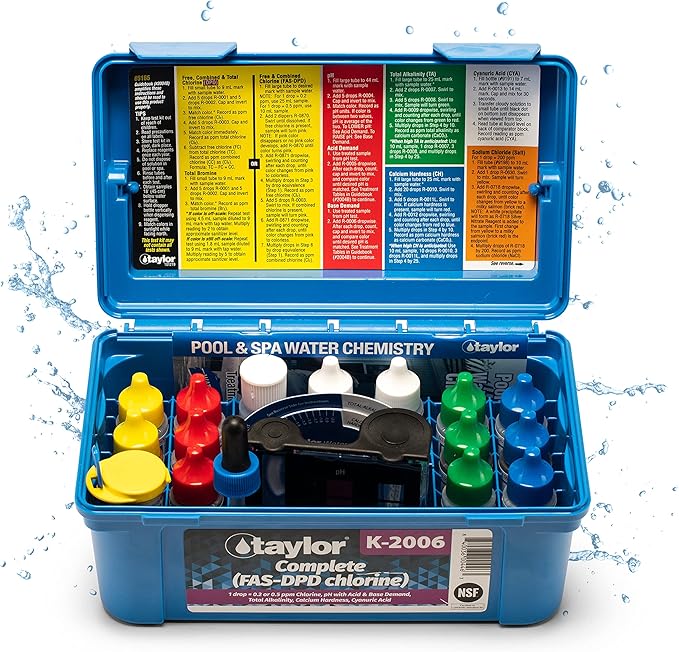
Taylor K-2006 Complete Water Test Kit
The kit pool professionals use. Tests free and total chlorine, pH, alkalinity, calcium hardness, and cyanuric acid with reagent-based tests. Far more accurate than strips for TA and CYA, which matter most for dosing decisions.
~$75

In The Swim Pool Shock — 68% Cal-Hypo (12 × 1 lb)
Granular calcium hypochlorite at 68% available chlorine. Pre-dissolves clean, no stabilizer added (unlike trichlor), and raises CYA by zero. Ideal for shocking without further increasing stabilizer levels.
~$30 / 12 lbs

Clorox Pool & Spa pH Up — 4 lb
Soda ash granules to raise pool pH. Dissolves cleanly, acts fast. The standard choice for pH correction in acidic water. Pre-dissolve in a bucket before adding to avoid temporary cloudiness.
~$12 / 4 lbs

Clorox Pool & Spa pH Down — 5 lb
Dry acid alternative to muriatic acid. Safer to handle and store, no fumes. Lowers pH and slightly lowers total alkalinity. Good for weekly maintenance; muriatic acid is more cost-effective for large pH drops.
~$14 / 5 lbs
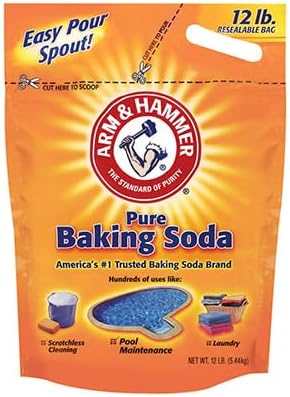
Arm & Hammer Baking Soda — 12 lb
Bulk baking soda is exactly the same thing as branded pool alkalinity increaser at a fraction of the price. 12-lb bag is the cost-effective way to raise total alkalinity — use your calculator to figure out exactly how much you need.
~$15 / 12 lbs
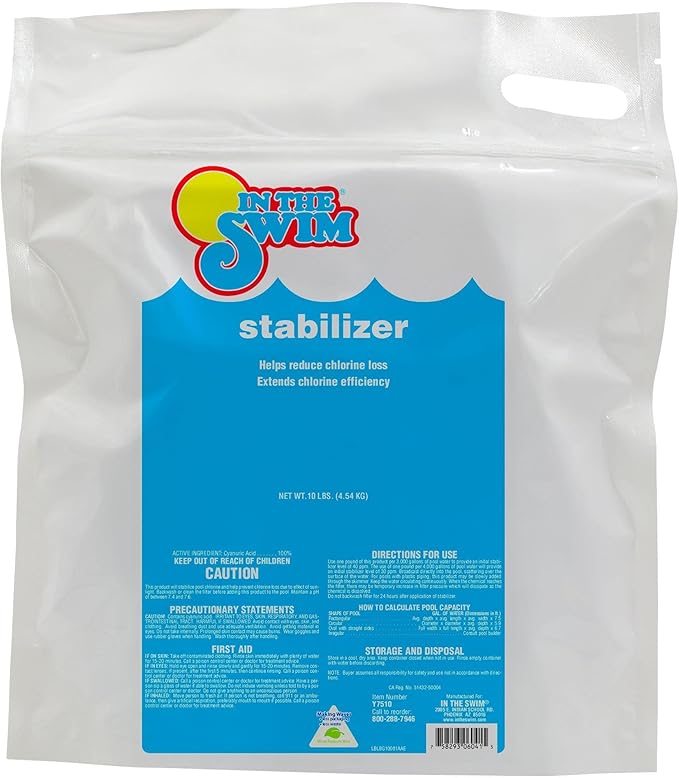
In The Swim Cyanuric Acid Stabilizer — 10 lb
Pure cyanuric acid granules to raise CYA levels. Add via a skimmer sock or pre-dissolve partially before adding — CYA takes 24–48 hours to fully dissolve and register on a test. Don't retest and dose again the same day.
~$30 / 10 lbs
* Affiliate links — we may earn a small commission at no extra cost to you.
Frequently Asked Questions
Common questions about pool water chemistry and chemical dosing.